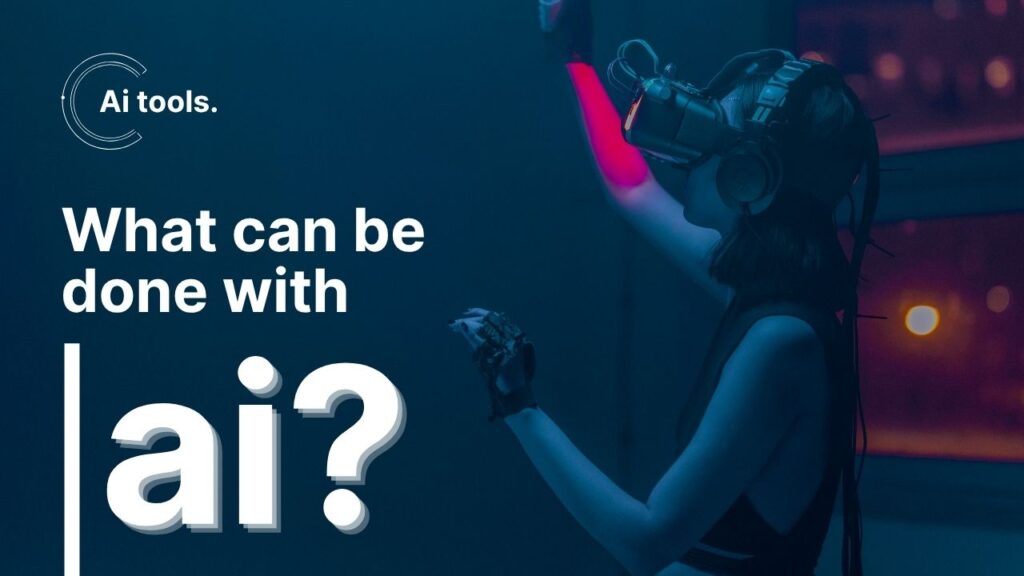
What Can Be Done With AI? A Beginner’s Tour Through Real-World Industries If you’ve spent any time online lately, you’ve probably noticed that “AI” is everywhere — in your phone, your inbox, your favorite apps, even the ads you scroll past. But beyond the buzzwords, what is AI actually doing? Who’s using it, and for what? This guide breaks it down in plain language, industry by industry, so you can see exactly where AI shows up in the real world — no technical background required. What Do We Mean by “AI Tools”? Before diving in, let’s clear up one thing: AI isn’t a single product. It’s a broad category of software that can recognize patterns, generate content, make predictions, and automate tasks that used to require a human. Some AI tools chat with you in plain language. Others quietly run in the background, sorting data or flagging anomalies. Some create images, video, or music. Others assist surgeons, pilots, and engineers. With that in mind, let’s look at how different industries are putting AI to work. Healthcare: Faster Diagnoses, Smarter Care Healthcare is one of the most promising — and closely watched — areas for AI. Tools now help doctors spot patterns in X-rays and scans faster than the human eye alone might catch them. AI-powered systems can flag potential issues in medical imaging, support drug discovery by simulating how molecules might behave, and help hospitals predict patient risk so care teams can intervene earlier. On the patient side, AI chat assistants help people understand symptoms, schedule appointments, and even monitor chronic conditions through wearable devices that track vitals in real time. Education: Personalized Learning at Scale Imagine a tutor who never gets tired and adapts to exactly how you learn. That’s the promise AI brings to education. Adaptive learning platforms adjust the difficulty of lessons based on how a student is performing, AI writing assistants help students brainstorm and refine essays, and automated grading tools free up teachers’ time for more meaningful instruction. For language learners, AI-powered apps offer instant pronunciation feedback and conversation practice — something that used to require a human tutor on call. Business and Marketing: Working Smarter, Not Harder This is where many people first encounter AI tools directly. Businesses use AI to draft emails, summarize meetings, generate marketing copy, and analyze customer feedback at a scale no team could manage manually. AI-powered chatbots now handle a huge share of customer service inquiries, answering common questions instantly and escalating complex ones to a human. Marketers use AI to generate ad variations, predict which campaigns will perform best, and personalize content for different audience segments — all in a fraction of the time it used to take. Entertainment and Creative Industries AI has quietly become a creative collaborator. Musicians use AI tools to generate backing tracks or experiment with new sounds. Filmmakers use AI for visual effects, voice dubbing, and even de-aging actors on screen. Video game studios use AI to build more realistic character behavior and generate vast, detailed game worlds faster than manual design would allow. For everyday creators, AI image and video generators have made it possible to produce professional-looking visuals without a design background — which is part of why you’re seeing so many AI-themed thumbnails and graphics online (like the one that probably brought you to this post). Finance: Smarter Decisions, Faster Detection Banks and financial institutions were early adopters of AI, mostly because the stakes — and the data — are so large. AI systems monitor transactions in real time to catch fraud, often flagging suspicious activity within seconds. Investment platforms use AI-driven models to analyze markets and assist with portfolio decisions. Even everyday banking apps use AI to categorize your spending and suggest budgets. Transportation: From Navigation to Autonomy If you’ve used a navigation app, you’ve already benefited from AI predicting traffic patterns and rerouting you in real time. But the bigger story is unfolding in autonomous vehicles, where AI processes camera and sensor data to make split-second driving decisions. Logistics companies also use AI to optimize delivery routes, saving fuel and time across entire fleets. Retail and E-Commerce: Knowing What You Want Ever wonder how online stores seem to know exactly what you might want next? That’s AI-powered recommendation engines at work, analyzing browsing and purchase history to personalize what you see. Retailers also use AI for inventory forecasting — predicting what will sell and when — and for powering virtual try-on tools that let you preview clothes or makeup before buying. Manufacturing: Precision and Prediction On factory floors, AI-equipped sensors monitor equipment to predict when a machine might fail — before it actually breaks down. This is called predictive maintenance, and it saves manufacturers enormous amounts of downtime and money. Computer vision systems also inspect products on assembly lines, catching defects far more consistently than a human inspector working long shifts. Where Things Are Headed: Immersive and Wearable AI As AI matures, it’s increasingly merging with how we physically experience technology — think VR headsets, haptic gloves, and motion sensors that respond intelligently to your movements. This combination of AI with immersive hardware is opening doors in training simulations, remote surgery, virtual design, and entertainment experiences that adapt to you in real time. This is the frontier worth watching: AI isn’t just something you type questions into anymore. It’s becoming something you move through. Final Thoughts AI’s reach now extends into nearly every industry you can think of — and this list barely scratches the surface. The common thread across all these examples is simple: AI helps people and organizations do things faster, with more precision, and often in ways that simply weren’t possible before. You don’t need to be a programmer or data scientist to benefit from any of this. Whether you’re a student, a small business owner, or just AI-curious, there’s likely already a tool out there solving a problem you didn’t even realize AI could help with. The best way to understand AI isn’t